
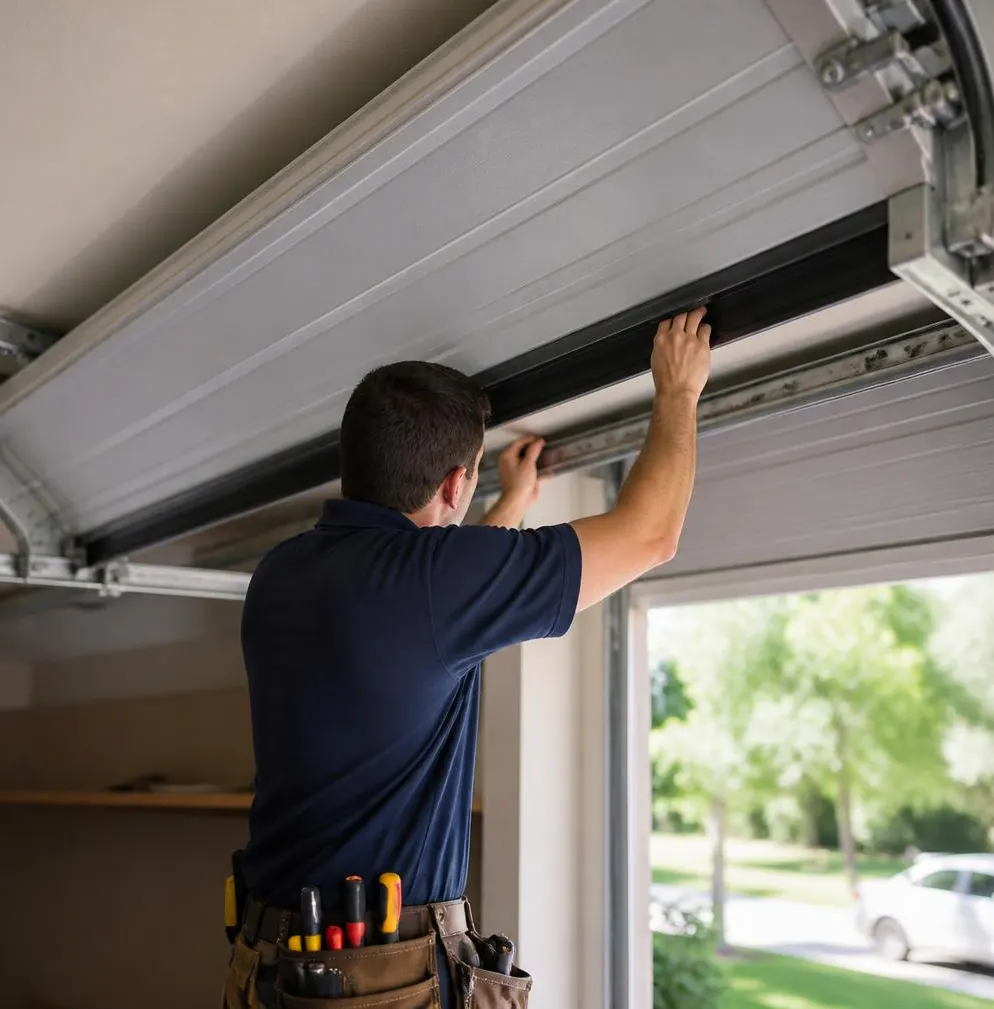
The Moment You Notice Something's Off
You hit the button, the door starts down, and then it stops a few inches above the floor, shudders, and goes right back up. Or maybe it never moves at all — you just get a blinking light on the wall opener and nothing happens. There's nothing in the way. No kids, no bikes, no cat darting under the door. But the garage door acts like there is.
That's your photo-eye sensors doing exactly what they're designed to do: refusing to close the door when they think the beam between them is broken. The problem is, that beam gets 'broken' by a lot more than people and pets, and tracking down the real cause is usually a five-minute fix once you know where to look.
What the Sensors Actually Do
Every garage door opener built in the last few decades has two small sensor units mounted a few inches off the floor, one on each side of the track, facing each other. One sends an invisible infrared beam, the other receives it. As long as that beam is unbroken, the opener is told the path is clear. If the beam is blocked, misaligned, or dirty enough to scatter, the opener refuses to close the door — or reverses it immediately if it's already moving.
This is a federally required safety feature for a reason: it's what keeps a closing door from coming down on a child, a pet, or your own foot. It's not a suggestion system. It's the last line of defense before several hundred pounds of door meets whatever's underneath it.
Why They Trip: The Usual Suspects
In this part of Charles County, a few things show up again and again as the actual culprit:
- Dirt and dust film. Gravel driveways, lawn mowing, and general garage traffic coat the lenses with a thin haze over time. You often can't see it just glancing at the sensor, but it's enough to scatter the beam.
- Condensation. As humid days give way to cooler nights this time of year, moisture can bead up on the lens surfaces, especially in garages that aren't heated or well-ventilated. A foggy lens behaves a lot like a dirty one.
- Spiderwebs. Garages are prime real estate for spiders heading indoors as it cools off, and a web strung across even one sensor lens will intermittently block the beam.
- Knocked-out alignment. A bike handlebar, a leaning ladder, a stray soccer ball, or just years of minor bumps can nudge a sensor bracket a few degrees off. The sensors don't have to be badly misaligned to lose the beam — a small shift is often enough.
- Loose or corroded wiring. Older homes with original openers sometimes have sensor wiring that's been nicked, pinched, or corroded at the connection points. Humid summers and salt-laden winter spray near garage floors can accelerate this.
- Sunlight glare. On very bright mornings, direct sun hitting a receiver sensor at the right angle can wash out the signal, making the door act flaky at a specific time of day.
How Badly This Can Go
Most of the time, a tripped sensor is just an annoyance — the door won't close, you troubleshoot, you fix it. But two failure modes are worth taking seriously. First, a sensor that's failing intermittently (works sometimes, not others) can give you false confidence that everything's fine, right up until the one time it doesn't catch an obstruction. Second — and this is the dangerous one — some homeowners respond to a frustrating sensor by disconnecting it, taping the wires together, or using the opener's 'force close' or limit settings to override the safety check entirely. That turns the door back into a dumb machine with no ability to sense what's underneath it. If a sensor is failing, the fix is to repair or replace it, never to bypass it.
How to Clean and Align Them Yourself
- Power down first. Unplug the opener or shut off its breaker before touching wiring.
- Wipe both lenses with a soft, dry microfiber cloth. Avoid household glass cleaner, which can leave a film; a barely damp cloth followed by a dry one works better.
- Check for a solid indicator light on each sensor. Most units show solid light when aligned and a blinking or dim light when the beam is off. Consult your opener's manual for your specific brand's pattern.
- Loosen the wing nut or screw on each bracket slightly and gently adjust the sensor's angle until both lights go solid, then retighten.
- Clear the sensor area. Move stored items, bikes, and trash cans away from the beam path along the floor.
- Inspect wiring for nicks, fraying, or loose connections at the sensor and at the opener head, especially if the unit is several years old.
- Test the door by waving a broom handle through the beam while it's closing — it should reverse immediately. If it doesn't, stop using the opener until it's repaired.
When to Call Bryans Road Garage Door
If cleaning and realigning doesn't solve it, or the lights won't go solid no matter how you angle them, the sensor unit itself or its wiring may have failed — common after years of humidity cycling and minor bumps. That's a job for our Garage Door Opener Repair & Installation service, where we test the wiring from sensor to opener and replace faulty components rather than just resetting things temporarily. If your door has other quirks alongside the sensor issue — slow closing, uneven movement, or age-related wear — it's worth adding our Garage Door Maintenance service to the visit so we can check springs, cables, and rollers at the same time.
If your garage door in Bryans Road, MD or anywhere nearby in Charles County won't close reliably, don't live with a bypassed safety sensor. Call Bryans Road Garage Door and we'll get it diagnosed and fixed properly.